Korea frequently asks for an FBI background report as part of visa, residency, employment, and citizenship processes, and it must be authenticated for use there. Because the FBI report is a federal document, that authentication goes through the U.S. Department of State rather than California, and Korea’s requirements around translation and timing are worth understanding before you begin.
Why Korea asks for an FBI report
Korean authorities often want an FBI background report to verify an applicant’s criminal history from a trusted national source. Because it comes from the U.S. government and is tied to fingerprints, it is the record they rely on rather than a local check.
Federal authentication, not state
Since the FBI report is federal, it is authenticated by the U.S. Department of State, not the California Secretary of State. That is the same federal route used for any FBI apostille, and it runs longer than a quick state authentication.
Translation for Korean authorities
Korea commonly requires the authenticated report translated into Korean by a certified translator. Bundling that translation with the authentication keeps the submission from being returned for a language requirement.
Timing around a Korean deadline
Korean consular and immigration processes often give a window, and the federal route can take five to six weeks by mail. Handling the FBI report and authentication together compresses that to about fourteen business days, which matters when a date is fixed.
Confirm Korea’s current requirement
Exact requirements can change, how recent the report must be and how it should be presented, so confirming Korea’s current expectation before starting means the authenticated report is accepted the first time.
The slow way versus handling it in one place
The mail-in path for an FBI apostille means getting the FBI report yourself, then mailing it across the country to the U.S. Department of State and waiting, frequently five to six weeks or more, with no easy way to check progress. A single wrong step at the front end restarts the entire clock.
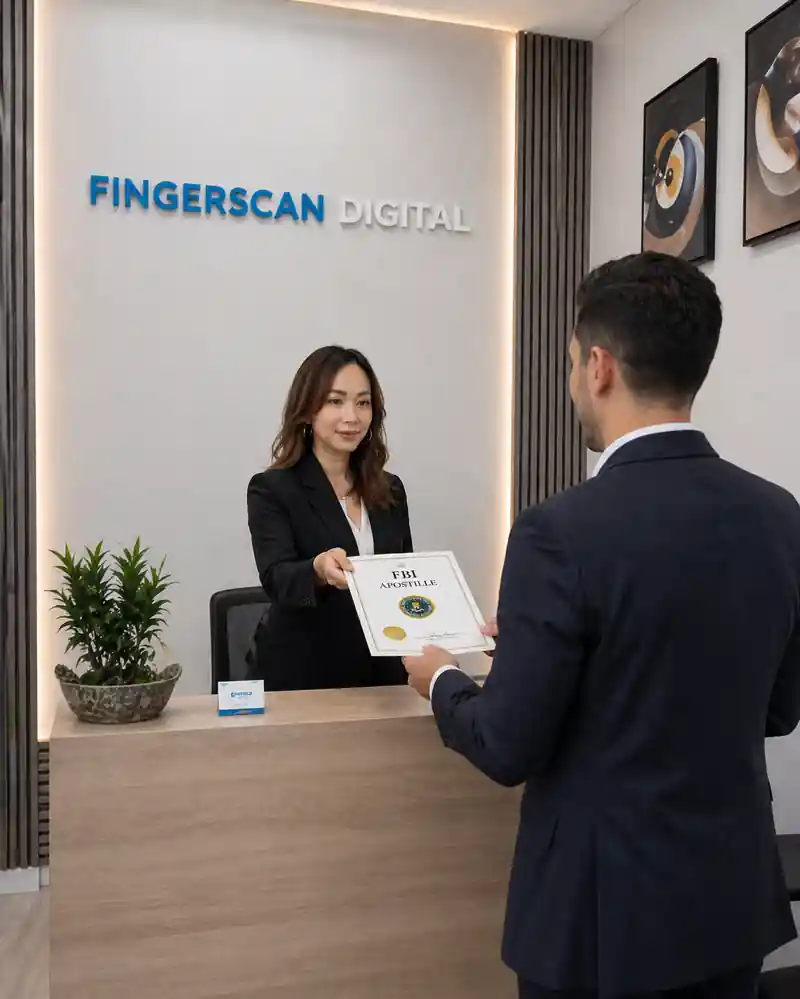
We handle the FBI report and the federal authentication as one package in our San Jose office, so the whole thing finishes in about fourteen business days instead of a month and a half. Certified translation is bundled when your destination country needs it. See how our FBI apostille works, or book an appointment.
Frequently asked questions
Why does Korea require an FBI apostille?
Korean visa, residency, and citizenship processes often want an FBI background report from a trusted national source, authenticated so Korea can rely on it. That authentication is the apostille.
Who authenticates the FBI report for Korea?
The U.S. Department of State, because the FBI report is a federal document. The California Secretary of State cannot authenticate it.
Do I need a Korean translation?
Commonly yes. Korea usually requires the authenticated report translated into Korean by a certified translator, which can be bundled with the authentication.
How long does an FBI apostille for Korea take?
By mail it commonly runs five to six weeks or more. Handled together by one provider, it can finish in about fourteen business days.
Can Fingerscan Digital handle the Korea package?
Yes, the FBI report, the federal authentication, and Korean translation when required, handled together in San Jose.
Fingerscan Digital is a DOJ-certified Live Scan office in San Jose. When you are ready, see our FBI apostille for Korea, FBI apostille, or explore apostille for Korea and book an appointment.
This article is general information about document and fingerprinting services, not legal advice. Fingerscan Digital Inc. is not an attorney or law firm and cannot advise on your immigration or legal matter. For legal advice about your situation, consult a licensed attorney.